
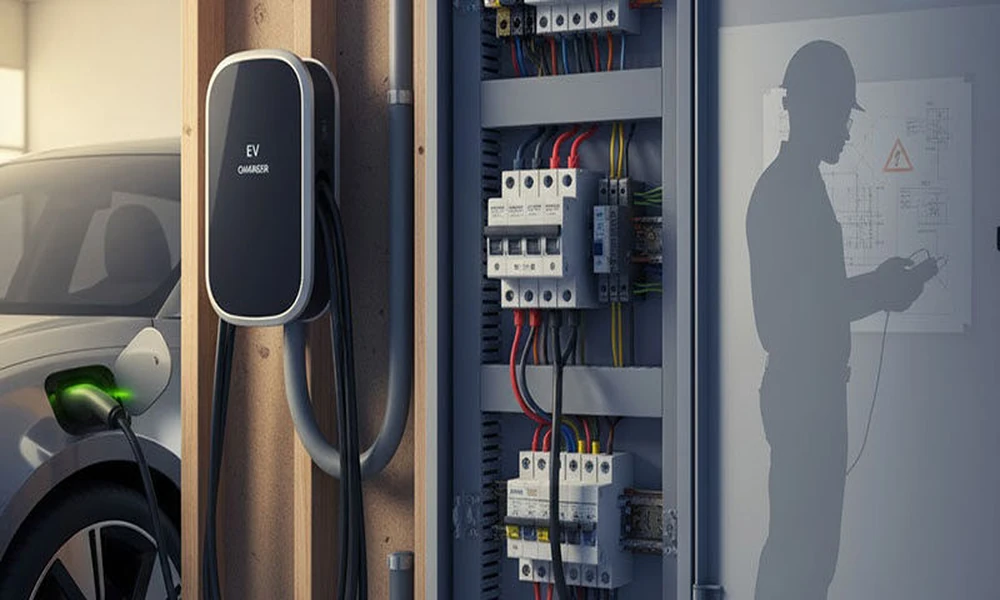
Bringing home an electric car is the easy part. The harder question shows up a few days later, when the cord that came with the car turns out to add only a handful of miles per hour of charging, and the idea of a proper wall charger in the garage starts to sound essential. Whether that charger can simply be added, or whether the house needs bigger changes first, depends almost entirely on when the home was built and what has been added to it since.
Sacramento makes this question more interesting than most places. The region holds everything from postwar ranch houses in Arden-Arcade and Carmichael to 1990s tract homes in Elk Grove and newer all-electric builds in Natomas. Each of those houses answers the charger question differently.
Before anyone buys hardware, it helps to have a Sacramento electrician look at the panel, run the numbers and check what the utility will chip in. The team at zgelectrical.com folds a panel capacity check into every EV estimate, which is the right instinct, because the charger itself is rarely the expensive part of the job.
Three Houses, Three Very Different Answers
The clearest way to see how this works is to walk through the kinds of homes that actually line Sacramento streets.
The 1950s Ranch With the Original Panel
Picture a single story ranch in a mature neighborhood with big shade trees. It probably started life on 60 or 100 amp service. Over the decades it gained central air, perhaps an electric dryer, maybe a kitchen remodel with new appliances. The panel may still be a Federal Pacific Stab-Lok or a Zinsco, two brands with a long record of breakers that fail to trip when they should.
This house usually cannot take a 48 amp charger without changes. Even a modest one can push the service past what is safe on a hot August evening when the AC is running hard. If the panel is one of those failure prone brands, the conversation shifts from the charger to the panel itself, and many insurers have started flagging those panels on their own.
The 1990s Tract Home
A two story home from the late eighties or nineties often has 150 or 200 amp service and a panel that still works well. Here the answer is often yes, with conditions. The panel may have the capacity but not the physical breaker spaces, or the garage may sit on the far side of the house from the panel, making the wire run long and costly. A subpanel, tandem breakers where the panel allows them, or a slightly smaller charger tends to solve it.
The Newer All Electric Build
Homes built in the last several years often came with solar, a heat pump and sometimes a prewired EV circuit. That sounds like the easy case, and often it is. The catch is that an all electric house has already spent much of its capacity on electric heat, cooking and water heating. Adding a second EV, a hot tub or a battery later can bump into the same limits an older home hits, just from a different direction.
What the Load Calculation Actually Counts
None of these judgments should be made by eyeballing the panel. Electricians use a load calculation, a structured estimate of how much power the house could realistically demand at once. It looks past empty slots and counts the things that truly matter.
- The size of the main service, usually stamped on the main breaker
- Square footage, which stands in for general lighting and outlets
- Large fixed appliances such as the range, dryer, water heater and dishwasher
- Heating and cooling equipment, counted at its larger seasonal demand
- Planned additions such as a pool pump, spa or second charger
When the math comes back tight, it does not automatically mean a new panel. It means choosing among a few smarter options.
Ways Around a Full Panel Upgrade
A lot of homeowners assume a charger forces a service upgrade. Often it does not. These alternatives come up again and again in Sacramento homes.
The first is simply choosing a smaller charger. A 32 amp unit on a 40 amp breaker adds roughly 25 miles of range per hour, which refills a typical daily commute overnight with hours to spare. Very few households actually need the 48 amp maximum.
The second is a circuit sharing device. It lets the charger and an electric dryer share one circuit, giving priority to whichever is in use, so the car waits while the laundry finishes.
The third is an energy management system. It watches the whole house in real time and throttles the charger whenever total demand climbs toward the main breaker’s limit. That keeps a 100 amp home safe without rebuilding the service.
SMUD actively encourages these routes. Its EV guidance for home charging explains circuit sharing and energy management as alternatives to a panel upgrade, and the utility’s Charge@Home program offers rebates on chargers, circuits and those load management devices. Rebate amounts change, so checking current figures before buying is worth a few minutes.
When the Panel Really Does Need to Go
Sometimes the honest answer is that the service has to grow. That is usually the case when the panel is a Federal Pacific or Zinsco, when the service is 100 amps or less and the family is also planning a heat pump or induction range, or when the main panel shows heat damage, corrosion or double tapped breakers.
A 200 amp upgrade involves more than swapping a box. The work needs a permit from the city or county, coordination with SMUD or PG&E to disconnect and reconnect the meter, and an inspection before the power is fully restored. Well planned jobs have the house running again the same day. Bundling the charger circuit into that same visit also saves a second round of labor, and SMUD has offered additional incentives when a panel upgrade is part of a broader switch away from gas.
Charging Habits Matter as Much as Hardware
Even a perfectly sized setup can cost more than it should if the car charges at the wrong time. SMUD’s residential rates are built around time of day, with the most expensive window falling in the late afternoon and early evening. That is exactly when most people pull into the driveway.
Scheduling the charger to start late at night costs nothing and keeps the car off the grid during peak hours, which also eases the load on an older panel when the AC is still running. Most modern chargers and cars handle this with a simple app setting.
Seen together, these pieces show why the right question is not whether a charger fits on the wall. It is whether the house, the panel and the household’s habits all line up behind it. An older Sacramento home can usually get there, sometimes with a smaller charger and a smart device, sometimes with a new panel that finally brings the house up to how people live in it now.
