
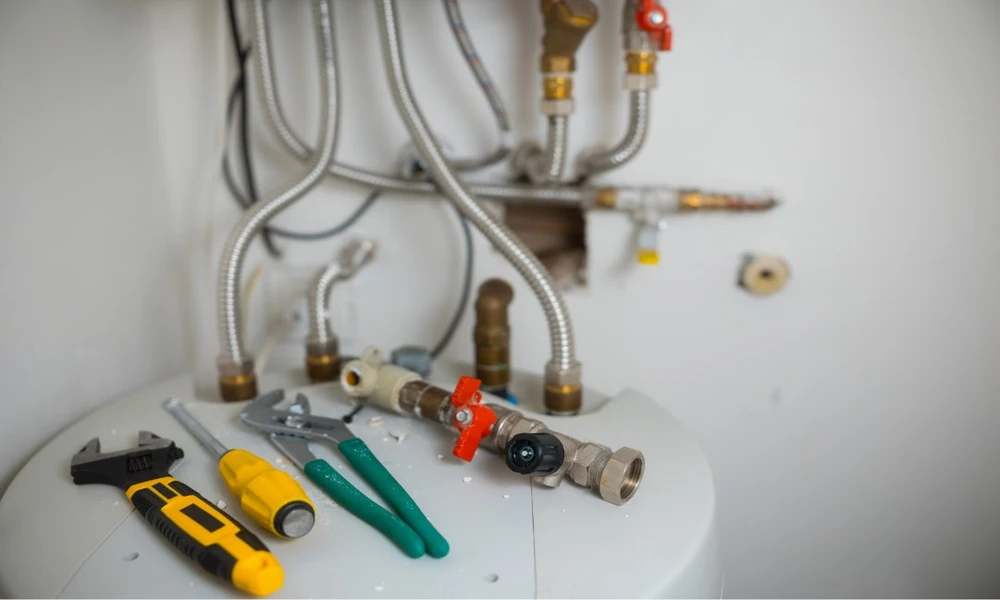
Most water heaters in Southwest Florida get chosen in a hurry. The old tank starts leaking into the garage on a Tuesday morning, someone reads the label, and an identical model goes in by the afternoon. That approach gets hot water flowing again, but it also locks in a decision that will shape your utility bills and your morning showers for the next decade or more, often without anyone stopping to ask whether the old setup ever suited the house in the first place.
Licensed as a Florida certified plumbing contractor under number CFC1431765, the team at callsamnow.com handles Naples water heater installation for tank models, tankless units and conversions between the two, and also takes on same day leak calls when an aging heater gives out. Every job gets a flat price before the work begins and a master plumber’s sign off at the end, and appointments can be booked online with a time window you pick. Whoever does the work, the five choices below deserve a few minutes of thought before the new unit arrives.
Electric, Gas or Something Smarter
The first question is what will actually heat the water. A large share of Naples homes are all electric, so a standard electric tank is the default replacement in many garages. Some neighborhoods have natural gas service, and homes further inland, especially out toward Golden Gate Estates, sometimes run on propane.
Switching fuels is possible but rarely simple. Moving from electric to gas means running a gas line, adding venting and confirming the line is sized for the new appliance’s demand. Moving from gas to electric usually requires a new 240 volt circuit and room in the electrical panel. Neither conversion is a bad idea, but each one adds cost that should be weighed against the long term savings it brings.
The Tank Question
Tankless water heaters attract a lot of attention, and for good reason. They heat water only when a tap opens, take up a fraction of the wall space and can last noticeably longer than a typical tank. Southwest Florida also gives them an edge that colder states don’t have. Incoming groundwater here arrives warm for much of the year, so the unit has a smaller temperature gap to close, and that means more hot water flow at the same power.
The catch with whole house electric tankless models is how much power they draw. Many need well over 100 amps of dedicated capacity, and older homes may need a panel upgrade before one can be installed. Gas tankless units avoid that issue but require proper venting and often a larger gas line. Hard water is the other consideration, since mineral scale builds up inside the heat exchanger and calls for a descaling flush about once a year. Homeowners who prefer a set it and forget it appliance sometimes find a conventional tank simply fits their habits better.
A Garage That Works in Your Favor
Heat pump water heaters are probably the most overlooked option in this part of Florida, even though the climate suits them almost perfectly. Rather than generating heat with an electric element, they pull warmth from the surrounding air and transfer it into the water, which can cut water heating electricity dramatically compared to a standard electric tank. A Naples garage that stays hot most of the year gives them an ideal heat source.
There’s a bonus as well. The unit releases cool, dry air as it runs, which takes some of the heat and humidity out of a stuffy garage. Researchers at the Florida Solar Energy Center have studied this closely, including a lab home experiment measuring how heat pump water heaters affect cooling and water heating energy in Florida’s hot, humid climate. Practical requirements include enough open air space around the unit, a condensate drain line much like an air conditioner’s, and acceptance of a low hum similar to a dehumidifier. Many models run on the same 240 volt, 30 amp circuit a standard electric tank already uses, which keeps installation straightforward in a lot of homes.
Getting the Size Right
Oversizing wastes energy keeping extra water hot, while undersizing leads to cold showers by the third person in line. For tanks, the number to look at is the first hour rating on the yellow label, which reflects how much hot water the heater can deliver in a busy hour, rather than just the tank’s gallon capacity. For tankless units, the key figure is flow rate in gallons per minute at your incoming water temperature. A few household signals are worth considering before choosing a size.
- How many people shower in the morning, and whether two showers commonly run at the same time.
- Whether there’s a large soaking tub, since filling one can drain a smaller tank in a single go.
- Seasonal swings in occupancy, which matter a lot here when grandchildren arrive for the holidays or a second home fills up in winter.
- Rain showerheads and body sprays, which use far more water than a standard showerhead.
Code Details That Protect the House
A water heater swap in Collier County is permitted work, and the details inspectors look for exist for good reason. The temperature and pressure relief valve needs a discharge line routed to a safe location so that scalding water never sprays across the garage. A drain pan under the tank catches slow leaks before they damage drywall or flooring. Homes with a check valve or backflow device at the water meter typically need a thermal expansion tank, since water expanding as it heats has nowhere else to go and can stress the heater and fixtures throughout the house.
Location matters too. Gas units installed in garages must meet specific requirements meant to keep fuel vapors away from the burner. In flood prone coastal areas, raising equipment higher off the floor can be the difference between a storm that soaks the garage and one that ruins the water heater too.
Water Quality Decides How Long It Lasts
The final decision often comes up after installation, but it plays a huge role in how long the new heater survives. Naples water carries enough minerals to leave sediment in the bottom of tanks, and private wells further inland tend to be harder and sometimes smell of sulfur. Draining a few gallons from a tank once a year, checking the anode rod every few years and descaling a tankless unit on schedule can add years to the heater’s life.
Most tanks in this region last somewhere around eight to twelve years, and the manufacture date is usually encoded in the serial number on the label. If yours is getting close to that range, the smartest move is planning the replacement now, while you can still weigh fuel type, size and efficiency calmly instead of rushing through the decision while water spreads across the garage floor.
